
How to Eliminate Standing Yard Water Before Winter
A puddle that remains for days after a fall storm is more than a seasonal inconvenience. Once temperatures drop, trapped water can freeze, expand, damage turf, create slick surfaces, and contribute to soil movement around foundations and hardscapes. The underlying drainage problem will still be there when spring snowmelt arrives—often with even more water to manage.
For homeowners across Southwest Iowa, fall is an important time to identify why water is collecting and make practical corrections before the ground freezes. Whether the cause is compacted soil, improper grading, clogged drainage paths, or runoff from a roof, the right fix begins with understanding how water moves across the property.
Signs Your Lawn Has a Serious Drainage Problem
Some temporary saturation is normal after a heavy storm. A drainage issue is more likely when water consistently remains for 24 to 48 hours, appears after ordinary rainfall, or returns in the same location.
Watch for these warning signs:
- Persistent puddles or soft, spongy ground
- Yellowing or thinning grass in low areas
- Mud tracked onto patios, sidewalks, or into the house
- Water flowing toward the foundation instead of away from it
- Soil washing away from slopes or planting beds
- Damp basement walls, musty odors, or visible foundation staining
- Ice forming repeatedly on walks or driveways
- Mulch and landscape material collecting around drain openings
Heavy clay and fine loess soil can make these symptoms worse. When compacted, these soils absorb water slowly. Sloped properties influenced by the Loess Hills terrain may experience the opposite problem: water moves too quickly, carrying valuable topsoil with it.
Before deciding how to eliminate standing water in a yard, observe the property during rainfall. Note where the water begins, the route it follows, and where it stops. This simple drainage map can reveal whether the problem originates with a downspout, a low spot, or the overall grade.
Why Standing Water Should Be Fixed Before the Freeze
Repeated freeze-thaw cycles can turn a manageable wet spot into damaged turf and uneven soil. Water expands when it freezes, lifting saturated soil. When the ground thaws, it may settle inconsistently and leave ruts, depressions, or loose pavers.
Runoff near a house deserves especially quick attention. Saturated soil can increase hydrostatic pressure against foundation walls, while erosion may expose or undermine areas that should remain supported. One puddle does not automatically mean structural damage, but water should not be allowed to collect against the house. Downspouts should discharge toward a safe outlet, and the surrounding grade should generally direct water away.
Standing water also creates winter safety concerns. A wet path in October can become a sheet of ice in December. Correcting drainage near entries, sidewalks, and driveways helps reduce slip hazards for family members, visitors, and delivery drivers.
Fall repairs also prepare the property for spring. Frozen ground limits infiltration, and melting snow can overwhelm an already saturated low area. Solving the cause now gives runoff a controlled route when warmer weather returns.
French Drain vs. Catch Basin for Yard Drainage
There is no universal drainage system for every property. The right solution depends on whether water is moving across the surface, collecting below it, or both.
French drains
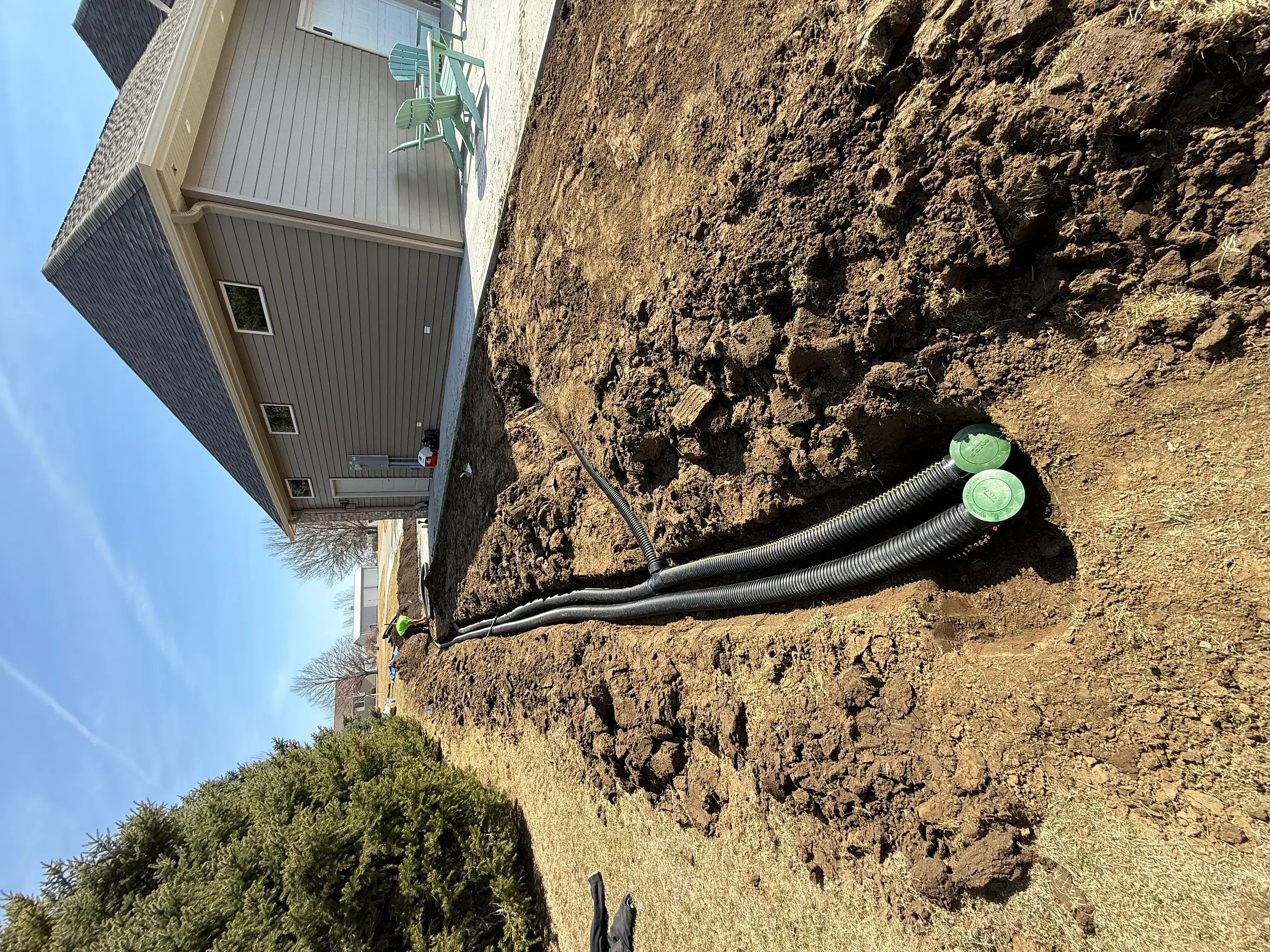
A French drain is a gravel-filled trench containing perforated pipe. Water enters along the length of the trench and is carried to an appropriate discharge point. It is often useful for:
- Chronically saturated strips of lawn
- Water seeping through a slope
- Subsurface moisture around planting areas
- Broad wet zones without one obvious collection point
French drains must have adequate pitch, suitable fabric and aggregate, and a legitimate outlet. A decorative gravel trench without these elements may clog or simply move the puddle elsewhere.
Catch basins
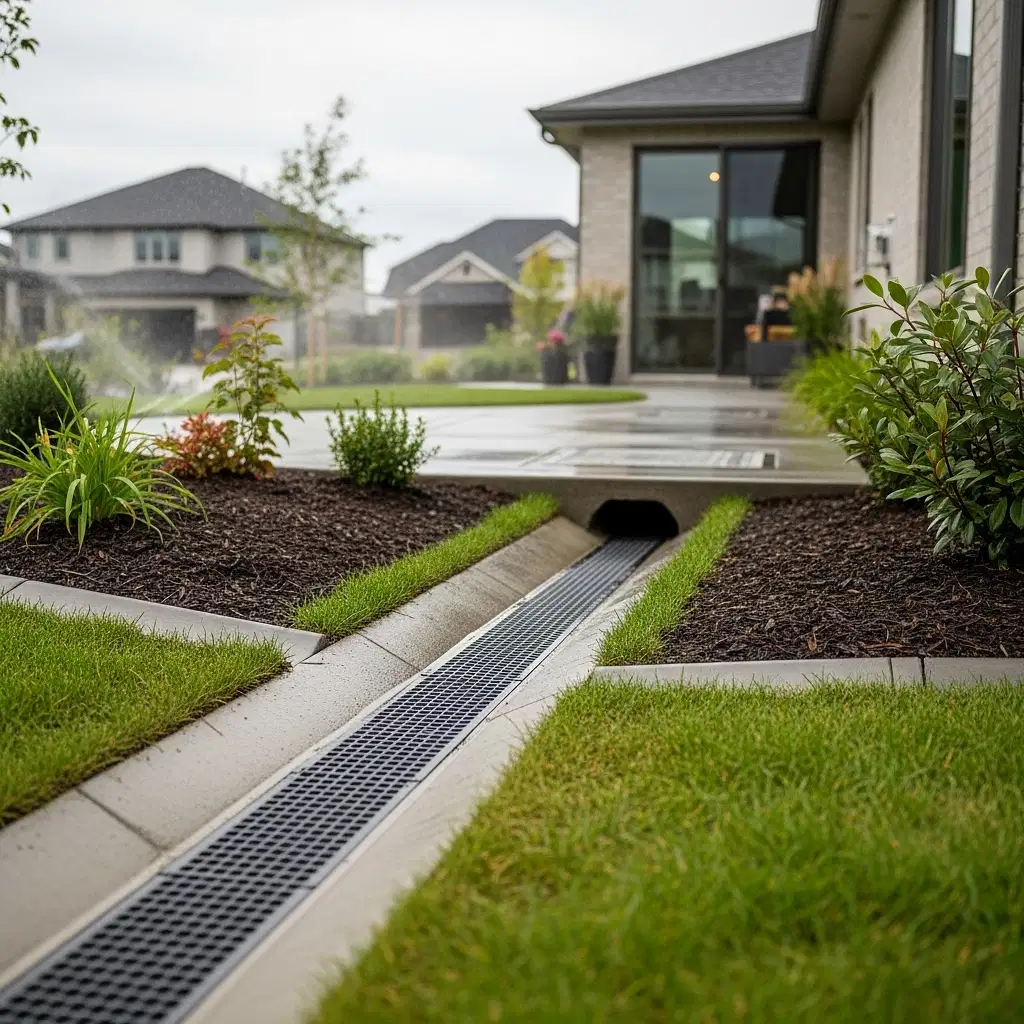
A catch basin collects surface water at a defined low point and sends it through solid pipe. It may be the better choice when:
- Runoff collects rapidly in one depression
- A downspout produces a concentrated flow
- Water crosses a patio or paved area
- A visible surface inlet can be positioned at the lowest elevation
Some properties need both systems: grading directs runoff toward a catch basin, while a French drain manages subsurface saturation. MLC’s drainage solutions are planned around the source, volume, soil conditions, and safe destination of the water—not just the location of the puddle.
Modern designs may also incorporate rain gardens, native plants, or permeable surfaces. These approaches reflect the growing focus on controlling stormwater close to where it falls, but they still require careful placement so water does not threaten foundations or neighboring properties.
Correct the Grade, Clear the Property, and Protect the Outlet
Drainage pipe cannot compensate for every grading problem. If the land slopes toward the building or contains deep depressions, reshaping the surface may be necessary. Professional land clearing and grading can establish positive drainage, stabilize eroding areas, and create a reliable route to the outlet.
Successful grading is more precise than adding a load of soil to a wet spot. Adding material without accounting for runoff may push water toward a neighbor, bury siding, cover utility features, or trap moisture elsewhere. Existing patios, walkways, trees, and utilities all affect the plan.
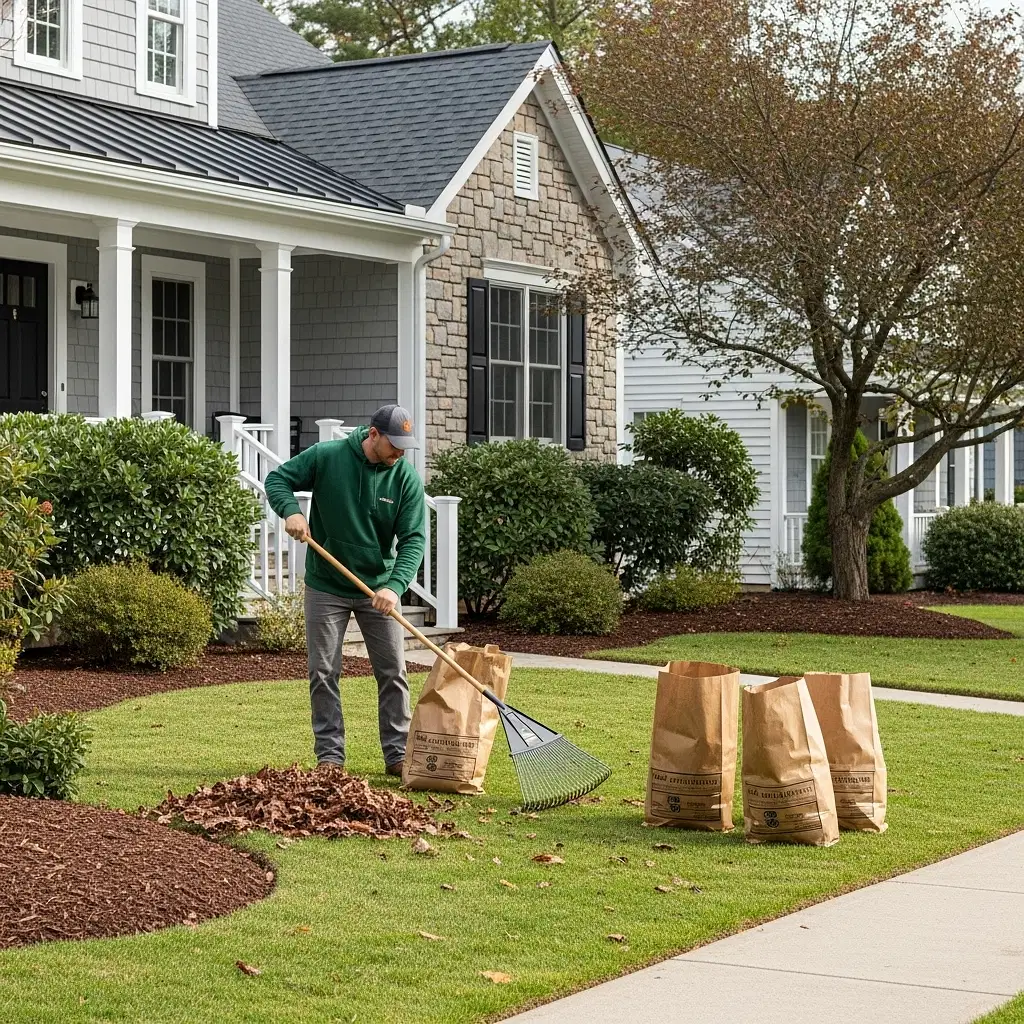
Fall debris also deserves attention. Leaves, sticks, sediment, and overgrown vegetation can block swales, drain grates, culvert openings, and downspout extensions. A thorough property cleanup restores those pathways and makes hidden low spots easier to inspect. Keep leaves out of drainage channels, check that basin grates are open, and confirm that pipe outlets have not been crushed or buried.
Before digging or changing how runoff leaves the property, have underground utilities located. Larger projects or work affecting public drainage systems may also require local approval. Requirements vary, so confirm them with the appropriate authority before construction begins.
Make a Long-Term Fix Before Winter Arrives
Standing water usually points to a larger issue with soil, elevation, runoff volume, or blocked drainage. The most durable response is to trace the source, protect the foundation, select the correct collection method, and ensure the water has a safe place to go. Regular inspection and cleanup then help the system continue working through fall storms, winter thaws, and spring snowmelt.
MLC brings 10 years of industry experience, more than 130 five-star reviews across multiple platforms, and a licensed and insured team to each project. Its approach emphasizes responsive customer service, reliability, and quality work designed to last in challenging regional soils.
If water is pooling on your property in Oakland or a surrounding community, contact MLC to discuss drainage solutions, land clearing and grading, or property cleanup. An evaluation before the freeze can help prevent a soggy fall problem from becoming a more expensive spring repair.