
Don't Let a Soggy Yard Spoil Your Fun: A Guide to Managing Stormwater Runoff in Southwest Iowa
A heavy Iowa downpour can be a welcome sight for thirsty lawns and gardens. But when that rain has nowhere to go, it can quickly turn from a blessing into a major headache. Puddles that never seem to dry, streams of water flowing toward your foundation, and persistent soggy spots can make your yard unusable and even cause costly damage to your property. For homeowners in Southwest Iowa, managing this stormwater runoff is a common challenge, especially with our unique terrain.
Uncontrolled water can lead to soil erosion, overwhelm local storm drains, and carry pollutants into our waterways. The good news is that you don't have to live with a swampy backyard. With thoughtful planning and professional landscape design, you can effectively manage stormwater, protect your home, and create a more beautiful, resilient outdoor space. This guide will walk you through the causes of poor drainage and explore modern, effective solutions to keep your property dry and healthy.
Understanding the Root of the Problem
Before you can fix a drainage issue, it helps to understand why it’s happening. Stormwater runoff occurs when rain falls on impervious surfaces—like roofs, driveways, and compacted soil—and can't soak into the ground. The water then flows across the land, picking up speed and volume. In our region, the unique composition of the Loess Hills can present specific challenges. While beautiful, the fine, silty soil can be prone to erosion when not properly managed, allowing water to carve paths where you don't want them.
Common signs of poor drainage include:
- Standing Water: Puddles that remain for more than 24 hours after a storm.
- Soil Erosion: Exposed tree roots or areas where topsoil has washed away.
- Soggy Lawn: Grass that feels spongy or squishy underfoot.
- Foundation Issues: Water pooling near your home's foundation, which can lead to cracks or basement leaks.
These issues aren't just an inconvenience; they can diminish your property's value and lead to expensive repairs. Addressing the problem at its source is the key to a lasting solution.
The Foundation of Good Drainage: Professional Grading
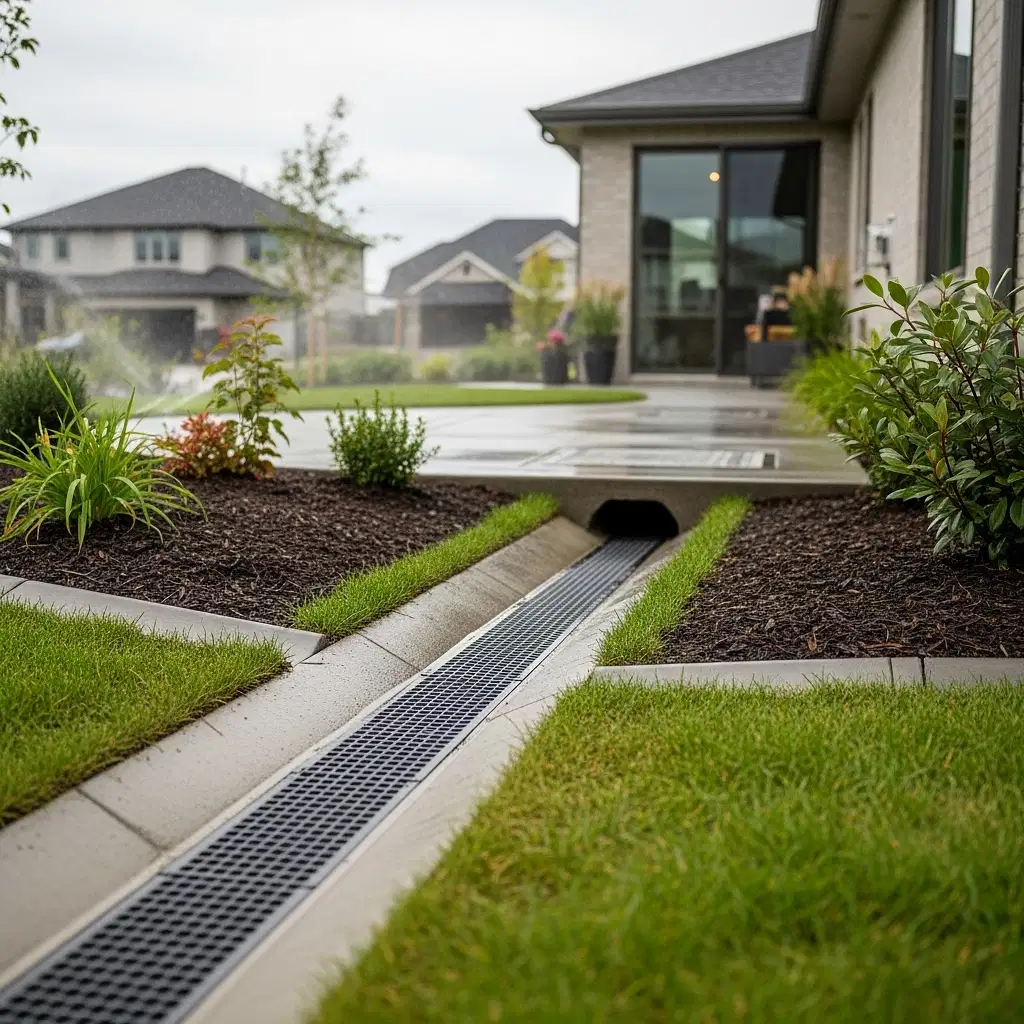
The single most important factor in controlling water flow is the slope of your land. Proper site grading ensures that water is directed away from your house and other structures, moving it toward an area where it can be safely absorbed or drained away. This is often the first step in any comprehensive drainage solution.
For new properties or landscapes undergoing a major renovation, professional land clearing and grading is essential. An experienced team can reshape the terrain to create a gentle, consistent slope that prevents water from pooling. This isn't just about moving dirt around; it requires precision and an understanding of how water behaves. Getting the grade right from the start prevents countless future problems, from a perpetually wet basement to significant erosion control challenges. This foundational work ensures that any subsequent landscaping features are built on a stable, well-drained base.
Integrating Smart and Beautiful Drainage Solutions
Once your property is properly graded, you can incorporate a variety of landscaping features that manage excess water while enhancing your yard's beauty and functionality. Modern drainage is about more than just underground pipes; it’s about working with nature to create a sustainable and attractive landscape.
Here are some of the most effective solutions we implement:
- Rain Gardens: These are shallow, landscaped depressions planted with water-tolerant native flowers and grasses. They are strategically placed to collect runoff from roofs or lawns, allowing the water to slowly soak into the ground. This process filters pollutants and provides a habitat for pollinators.
- Dry Creek Beds: A trench lined with landscape fabric and filled with stones and boulders of various sizes, a dry creek bed creates a natural-looking channel for water to follow during heavy rain. When dry, it serves as an attractive, low-maintenance garden feature.
- French Drains: A classic and highly effective solution, a French drain is a perforated pipe buried in a gravel-filled trench. It collects subsurface water and directs it away from sensitive areas like foundations or low spots in the yard.
- Permeable Pavers: For patios, walkways, and driveways, permeable pavers are an excellent choice. They allow water to pass through the joints between the pavers and into a gravel base below, reducing runoff and recharging groundwater.
By integrating these elements into a cohesive landscaping design, you can solve your water problems and create the beautiful outdoor living space you've always wanted.
Take Control of Your Yard with MLC
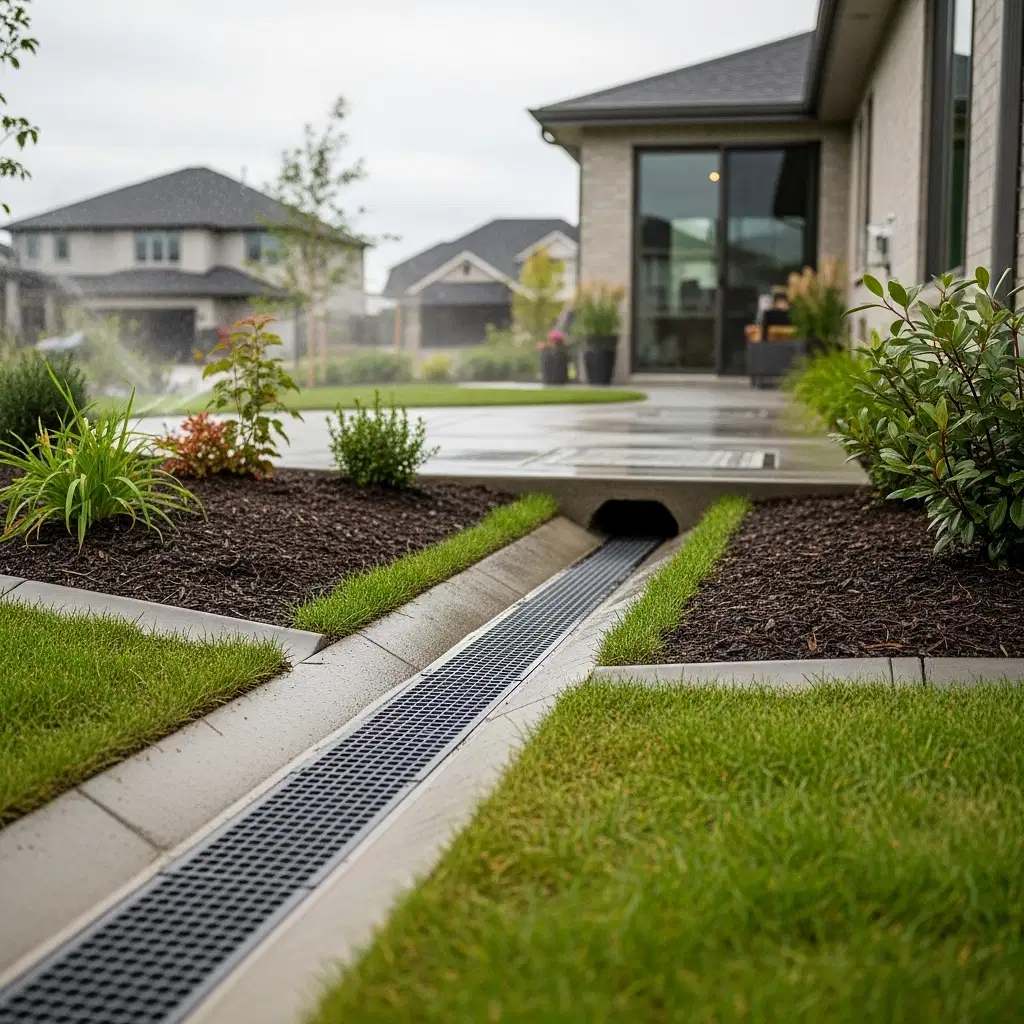
Dealing with stormwater runoff can feel overwhelming, but you don't have to do it alone. A well-drained yard is more than just a convenience—it protects your home's foundation, increases your property value, and gives you back a usable, enjoyable outdoor space for your family.
At MLC, we have over a decade of experience solving the unique drainage challenges of properties throughout Southwest Iowa. We combine foundational techniques like Land Clearing & Grading with innovative Drainage Solutions and beautiful, functional Landscaping to create systems that last. Our commitment to quality work and reliability means we build landscapes designed to withstand our region's specific conditions.
If you're tired of battling a soggy yard, let's talk. Contact us today for a consultation and discover how we can transform your property into a dry, beautiful, and resilient oasis.