
Protecting Your Landscaping from Winter Deicing Salt
Winter in Southwest Iowa brings its fair share of snow and ice, making deicing an essential part of property maintenance. We all want to keep our walkways, driveways, and commercial lots safe for family, customers, and visitors. However, the standard rock salt used to melt that ice can be incredibly harsh on your outdoor spaces. If you've ever noticed dead patches of grass lining your driveway come spring, or struggling shrubs near the street, winter salt is likely the culprit.
Learning how to prevent salt damage to lawn and garden areas can save you significant time, frustration, and money when the warmer weather returns. By adopting a few proactive strategies, you can maintain safe hardscapes throughout the freezing months without sacrificing the health of your soil or the beauty of your greenery.

How Deicing Salt Harms Your Plants
When traditional rock salt (sodium chloride) dissolves, it creates a highly saline runoff that seeps directly into your soil. This excess sodium creates a barrier that blocks plant roots from absorbing essential nutrients and water, essentially causing your plants to suffer from drought even when the ground is soaking wet from melting snow. Furthermore, when vehicles drive past and spray salty slush onto your garden beds, it coats the branches and needles of nearby plants, leading to severe chemical burns known as salt burn.
Protecting shrubs from winter deicing salt starts with understanding our unique local environment. Working in the distinct terrain of the Loess Hills for over a decade, we know that maintaining healthy soil composition is absolutely critical for plant survival. If salt builds up in the soil, it disrupts the natural structure, making it incredibly difficult for turfgrass and deep-rooted perennials to thrive.
To prevent this, you can take physical measures in late autumn. Wrapping vulnerable evergreen shrubs in breathable burlap provides an excellent physical barrier against salty slush sprayed by passing snowplows. Additionally, erecting temporary snow fencing along the most exposed garden beds can catch drifting snow and road salt before it settles onto your delicate perennial borders.
Proactive Steps: Landscaping Safe Ice Melt Alternatives
One of the most effective ways to protect your greenery is by swapping out traditional rock salt for landscaping safe ice melt alternatives. The industry is currently seeing a massive shift toward sustainable, eco-friendly property management, and winter care is a major part of that evolution.
Instead of harsh sodium chloride, look for products containing calcium chloride or magnesium chloride. While they should still be applied moderately, they are significantly gentler on vegetation and concrete. Calcium magnesium acetate (CMA) is another excellent, environmentally friendly choice that prevents snow particles from sticking together without harming your soil ecology. Alternatively, using coarse sand or gravel provides excellent traction on icy surfaces without introducing any chemical melting agents to your landscape.
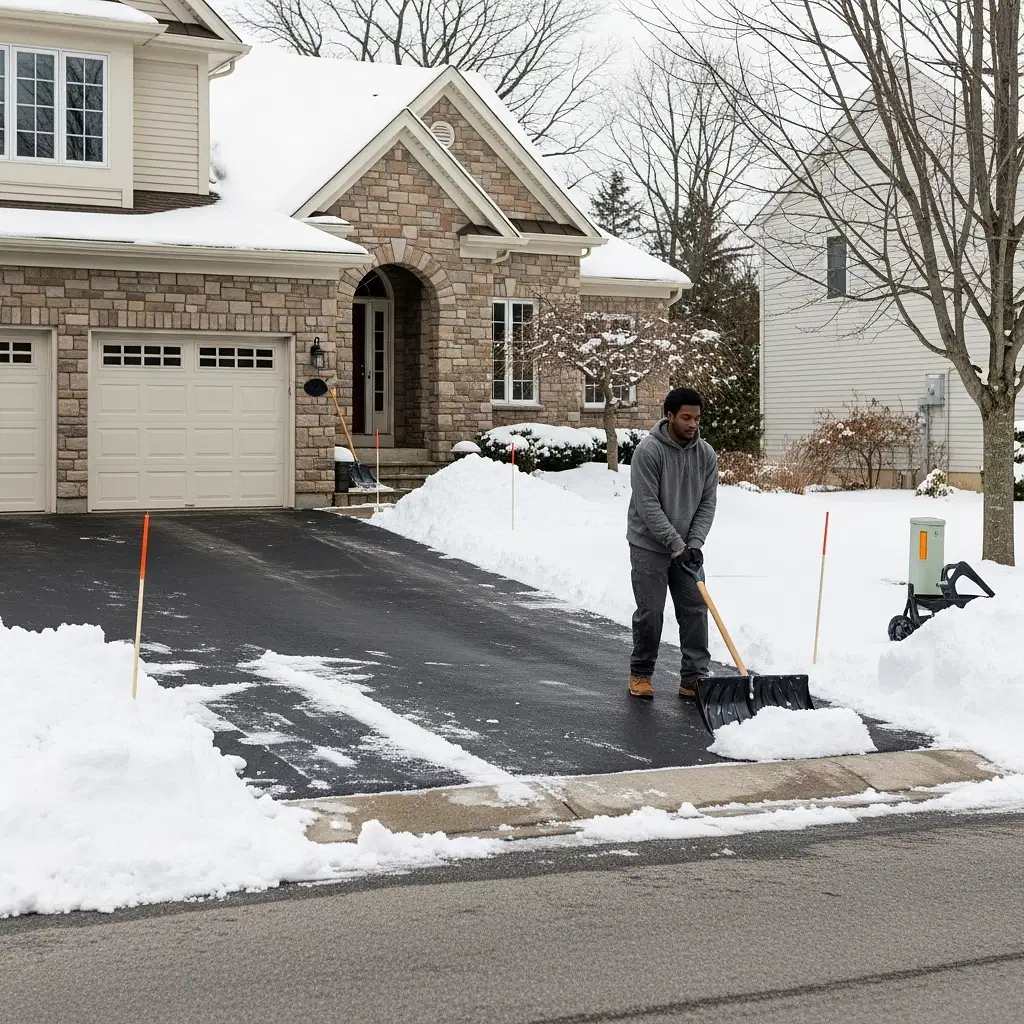
Another critical strategy is mindful snow placement. When clearing your property, be conscious of where you are piling the snow. Avoid piling snow from a heavily salted driveway directly onto your lawn or over the root zones of your favorite trees. As that snow mound melts in the spring, it delivers a highly concentrated dose of salt directly into the ground.
Ultimately, the best way to minimize the need for heavy salt use is prompt and thorough clearing of snow before it gets a chance to compact and freeze into ice. If you are a business owner or homeowner who struggles to keep up with the demands of winter weather, scheduling professional snow removal ensures that ice is managed efficiently while preserving the integrity of your surrounding plant life.
Repairing Salt Damaged Grass Along Driveways
Sometimes, despite your very best efforts, winter still takes its toll. When the snow finally retreats and the ground thaws, you might find yourself faced with the task of repairing salt damaged grass along driveways and sidewalks. The very first step in early spring is to flush the affected soil thoroughly with fresh water. Deep watering helps leach the accumulated sodium below the root zone of your grass, giving new growth a fighting chance.
Applying a soil amendment like pelletized gypsum can also accelerate the healing process. Gypsum actively displaces the harmful sodium in the soil with calcium, allowing the salt to wash away more easily while simultaneously improving soil structure and promoting healthy root growth.
If the grass is completely dead and brown, you will need to rake out the damaged turf and reseed the area. For homeowners looking to reduce future seasonal maintenance, consider updating your landscaping by replacing vulnerable turf with salt-tolerant native plants in those high-splash zones. At MLC, we believe in overbuilding our landscapes for longevity. This means we design and install outdoor spaces specifically to withstand local environmental challenges—including heavy winter runoff—so you don't have to constantly rebuild or repair them year after year.
Trust the Local Experts for Year-Round Care
Winter property management doesn't have to mean sacrificing the lush, vibrant yard you work so hard to maintain during the spring and summer. Whether you need reliable snow clearing to keep your family safe right now, or comprehensive lawn care to help your property bounce back beautifully in the spring, a proactive, knowledgeable approach makes all the difference.
At MLC, we pride ourselves on delivering genuine Iowa Nice customer service, bringing absolute reliability and high-quality workmanship to every property we touch. As a fully licensed and insured team with over ten years of industry experience and more than 130 five-star reviews, we know exactly what it takes to protect and enhance outdoor living spaces in Oakland and the surrounding communities. Contact us today to learn more about our winter services and start planning your spring recovery!